
Wastewater Containment Liner Performance: What Actually Drives Long-Term Risk
Applications
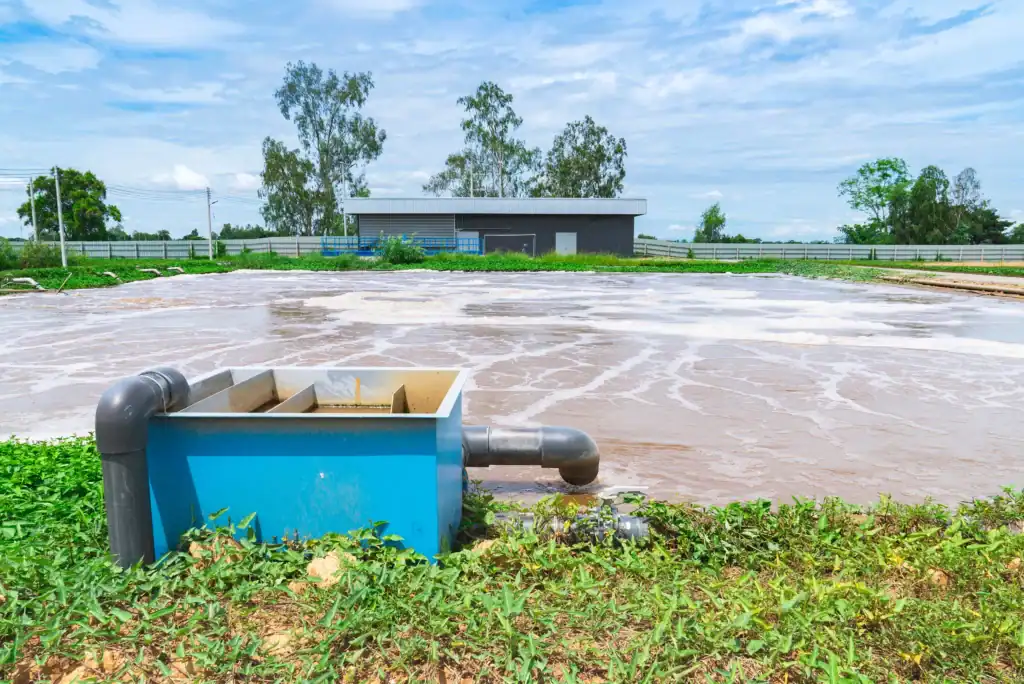
Treatment Lagoons
Municipal and industrial wastewater lagoon lining — earthen and concrete systems.
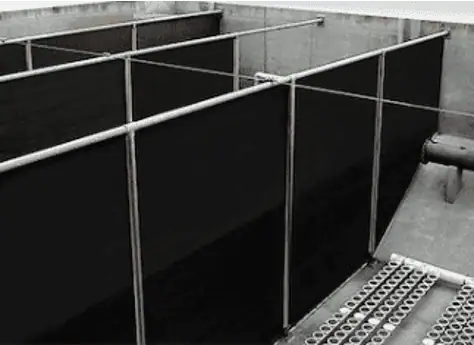
Baffle Curtains
Internal flow control and separation in lagoon and treatment systems
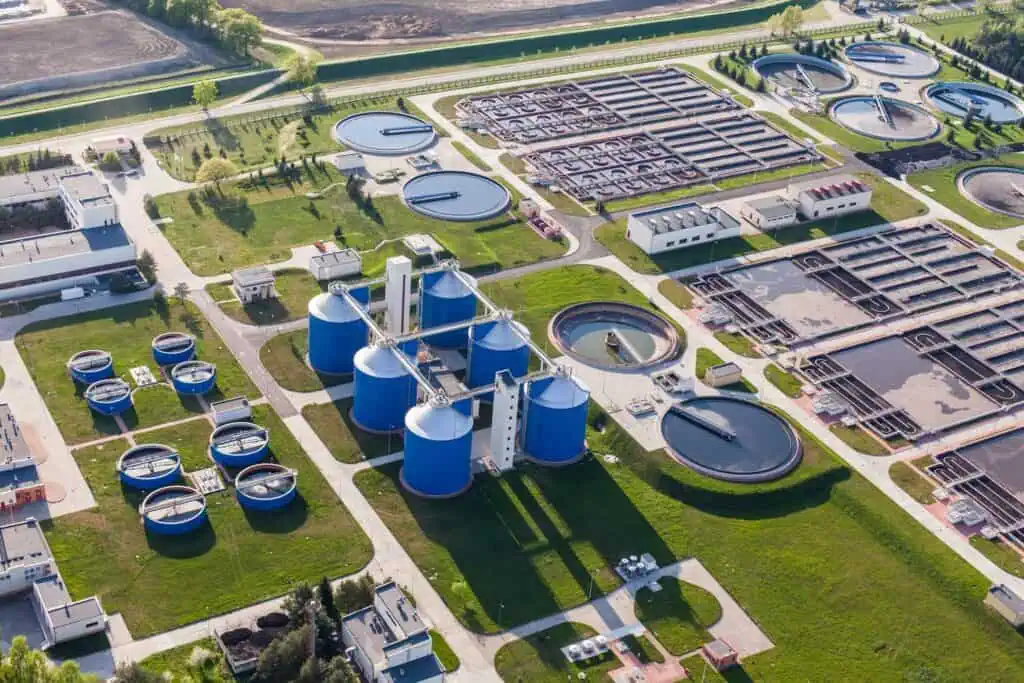
Dewatering Basins
Containment for solids dewatering and filtration operations.
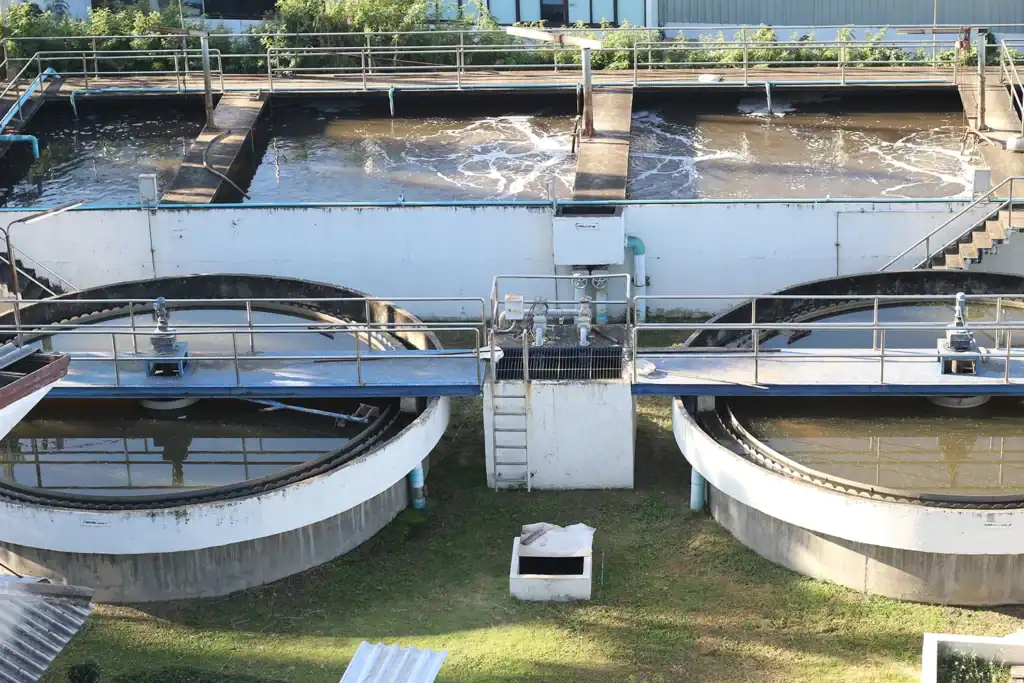
Sludge Impoundments
Long-term sludge and biosolids storage with chemical compatibility and flexibility requirements.
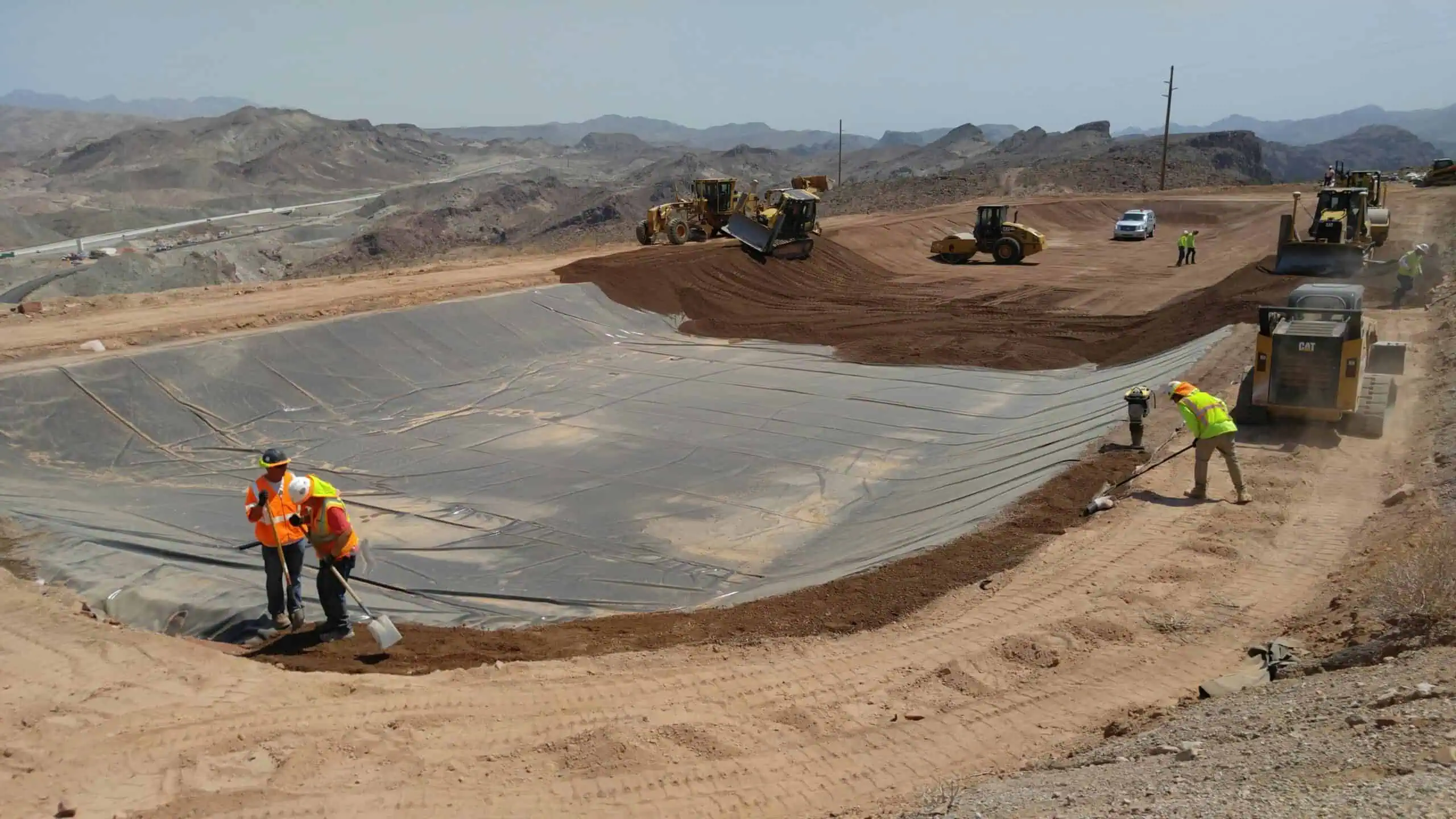
Evaporation Ponds
Open system containment with UV exposure requirements and extended surface contact.
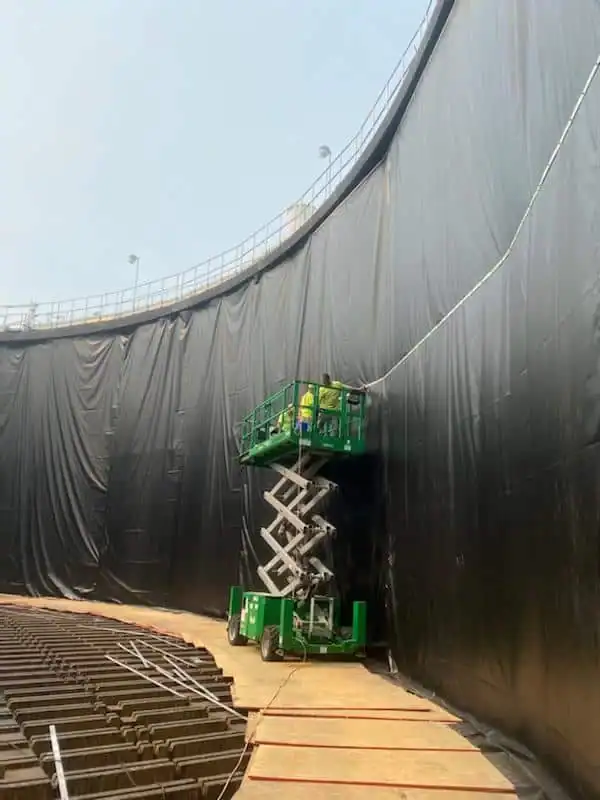
Trickle Tank Liners
Drop-in and retrofitted tank liner systems for wastewater storage and treatment vessels.
Where Wastewater Liner Performance Breaks Down
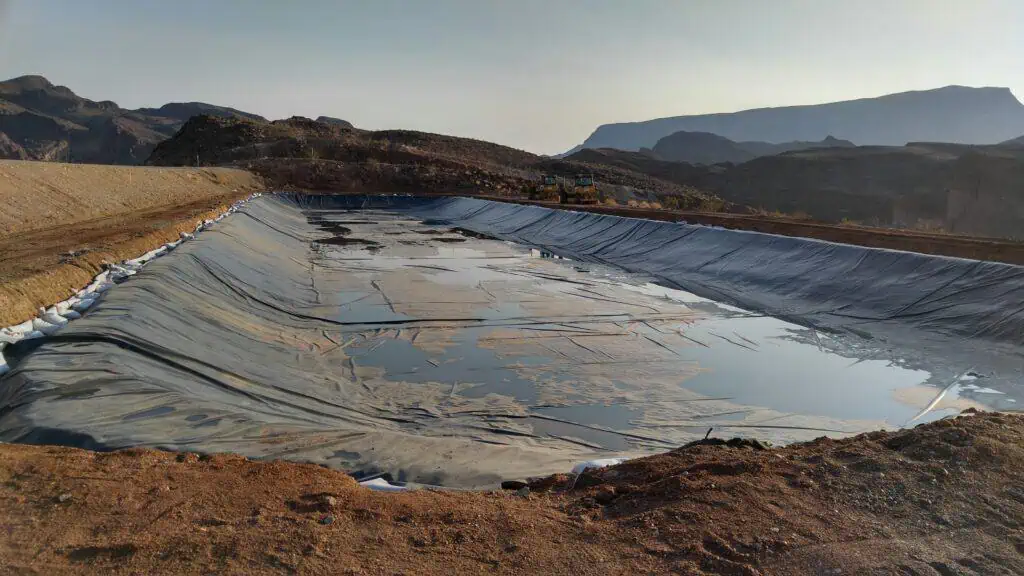
For lagoons, impoundments, equalization basins, and sludge storage, wastewater containment liner performance rarely fails at the sheet. It fails at the variables that didn’t get specified.
Chemical Exposure: H₂S, Acids, and Biologically Active Waste Streams
Hydrogen sulfide production, pH variability, and biological activity in active wastewater systems create exposure conditions that standard immersion testing doesn’t always capture. Liners that perform well in clean water environments have shown accelerated degradation once exposed to the microbiological and chemical profile of a working lagoon or sludge impoundment. Chemical compatibility with the specific waste stream — not just generic resistance ratings — is the relevant specification criterion.
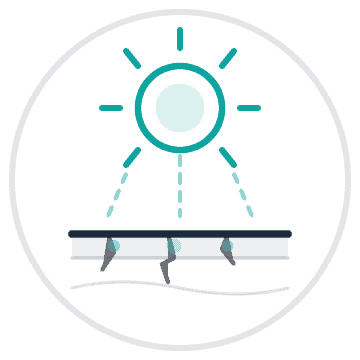
UV Degradation: Open Lagoon and Evaporation Pond Exposure
Open containment systems expose liner material to sustained UV radiation over years or decades of service life. Degradation in exposed areas compounds with the chemical exposure load from the waste stream below. UV performance data for the actual material and configuration — not the base polymer in isolation — is what matters when specifying for open lagoons or evaporation ponds.
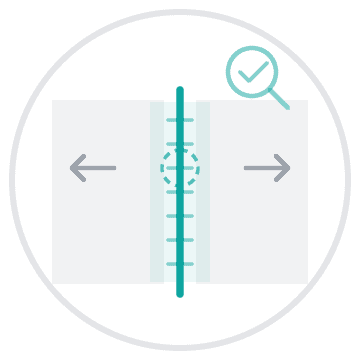
Seam Integrity: Variable Conditions During Installation and Over Time
Field seams in wastewater applications are subject to variable chemistry, thermal cycling, and biological activity at the interface. Seam failure is a disproportionate contributor to long-term system risk — particularly in aggressive chemical environments where even a small seam gap becomes an active exposure point. Seam quality, factory-fabrication options, and CQA documentation are all relevant considerations before installation begins.
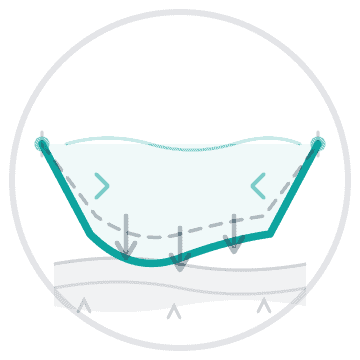
Subgrade Movement and Settlement: Earthen System Stability
Earthen lagoons and impoundments are subject to differential settlement, seasonal frost movement, and slope instability over the life of the system. Liner flexibility and elongation capacity under these conditions affects whether the system maintains containment integrity as subgrade conditions evolve. LLDPE products with high elongation ratings are specifically evaluated for this scenario.

Microbial Resistance: Biological Treatment Environments
In biological treatment systems — activated sludge, aerated lagoons, anaerobic digesters — liner material comes into prolonged contact with high concentrations of microorganisms and their metabolic byproducts. Microbial resistance varies across liner materials and should be part of the specification review for applications where biological activity is a sustained condition.
Material Selection by Application
XTRM Ply™ PVC
Best For
Lagoons, evaporation ponds, fast-deployment projects, municipal wastewater with general chemistry profiles.
Strengths
- Flexible and weldable
- Strong chemical resistance for general municipal wastewater
- Efficient field installation
Consideration
Confirm UV performance for long-term open exposure with project-specific specs.
ERCoat™ EIA
1000 & 7087 Series
Best For
Baffle curtains, steel tank linings, high-puncture-risk applications, aggressive industrial waste streams.
Strengths
- Exceptional puncture resistance and tear strength
- Advanced resistance to stress cracking
- 120″ width available — reduces seams on large installs
Flexliner™ LLDPE-R
Best For
Earthen lagoons, impoundments with subgrade movement, applications requiring high elongation.
Strengths
- High tensile strength and outstanding flexibility
- Excellent impact and puncture resistance
- OIT Grade for aggressive environments
- 20-year warranty option
Reducing Seam Exposure on Wastewater Installs
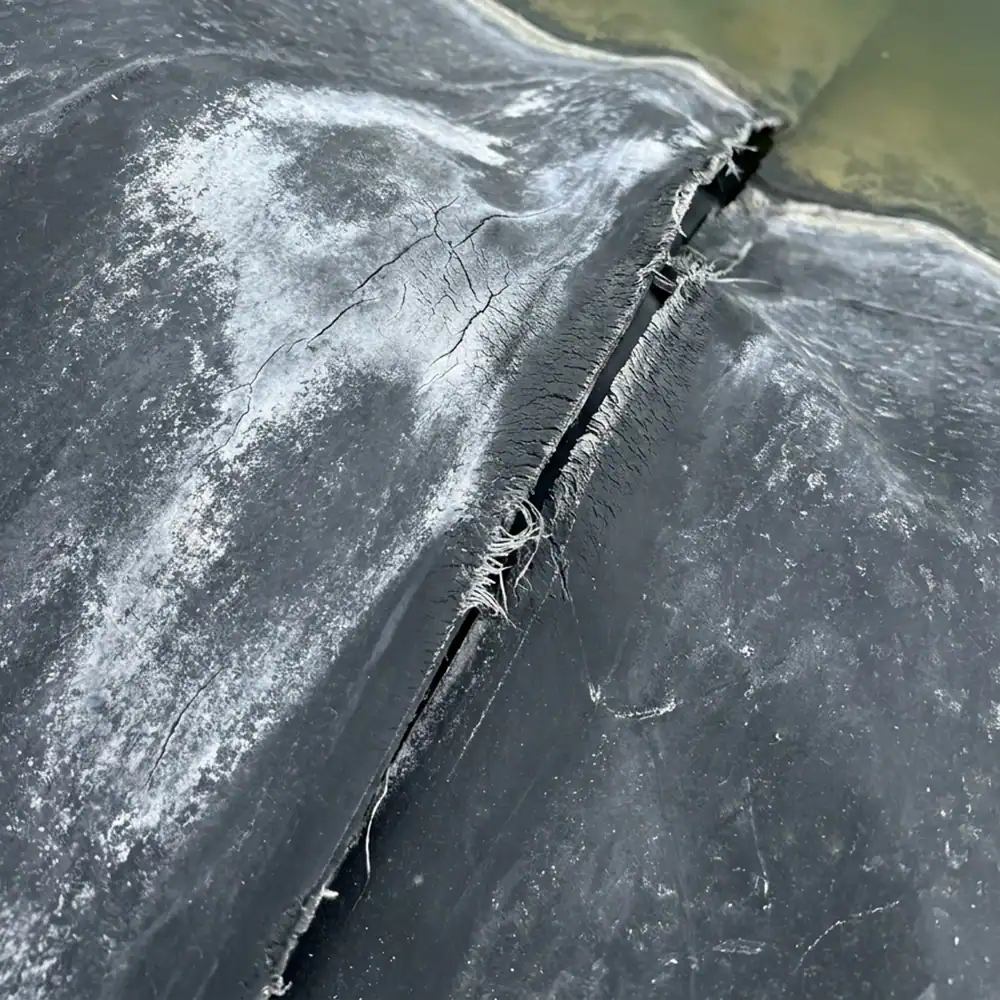
In aggressive chemical environments, seam count is a primary long-term risk variable, not a secondary one. Every field seam is a potential exposure point where waste stream chemistry can concentrate over time.
Factory-fabricated panels reduce this risk by:
- Improving installation consistency across variable site conditions
- Reducing field welding variability — especially in thermally challenging environments
- Simplifying CQA documentation for regulatory review
- Minimizing downstream performance risk at seam transitions
CQA Structure in Wastewater Containment Projects
What CQA Documentation Supports
Geomembranes must perform under tension, settlement, and pressure.
Certain materials are more susceptible to stress cracking—especially when combined with chemical exposure.
In susceptible materials, stress cracking may initiate at micro-defects or weld transitions.
Stress cracking resistance is a critical evaluation factor in potable containment.
When It Matters Most
Geomembranes must perform under tension, settlement, and pressure.
Certain materials are more susceptible to stress cracking—especially when combined with chemical exposure.
In susceptible materials, stress cracking may initiate at micro-defects or weld transitions.
Stress cracking resistance is a critical evaluation factor in potable containment.
What Engineers Should Evaluate
When assessing geomembranes for potable applications:
✅ Flexibility after repeated folding
✅ Long-term chlorine exposure performance
✅ Stress cracking resistance
✅ Seam quality consistency
✅ CQA documentation structure
These variables influence long-term containment defensibility.
Why Engineers Specify E Squared for Wastewater Management Projects
✅ Certified materials
✅ Fast documentation turnaround
✅ Custom fabrication options
✅ Global supply capability
✅ Direct engineering support
Key Differentiators
Key differentiators of E Squared EIA geomembrane product over their competition:
E Squared EIA geomembranes are engineered with a proprietary blend of high-quality materials, offering superior strength, flexibility, and chemical resistance compared to conventional geomembranes.
E Squared EIA geomembranes are designed to withstand harsh environmental conditions, including UV exposure, extreme temperatures, and chemical exposure, ensuring long-term performance and reliability.
E Squared offers tailored geomembrane solutions to meet specific project requirements, including thickness options, material compositions, and custom sizing, providing flexibility and optimization for various applications.
E Squared employs state-of-the-art seaming techniques to ensure strong and reliable connections between geomembrane panels, minimizing the risk of leaks and enhancing overall system integrity.
E Squared geomembranes undergo rigorous testing and certification processes to meet industry standards and regulatory requirements, providing assurance of performance, safety, and environmental compliance.
E Squared is committed to sustainability and environmental stewardship, utilizing eco-friendly manufacturing processes and materials, and offering geomembrane options that support water conservation and resource management initiatives.
E Squared provides comprehensive installation support, including technical assistance, training, and guidance from experienced professionals, ensuring proper installation and maximizing the effectiveness of the geomembrane system.
E Squared has a proven track record of successful geomembrane installations in a wide range of potable water applications, demonstrating reliability, performance, and customer satisfaction over time.
These key differentiators set E Squared EIA geomembranes apart from the competition, offering unmatched quality, performance, and support for potable water projects.
An E Squared technician will respond within one business day.