How shifting seam work from the field to the factory reduces risk, improves quality, and speeds up installation.
Why Factory Fabrication Matters
The integrity of a geomembrane containment system is only as strong as its weakest seam. Every field seam introduces an opportunity for error — variability in equipment settings, operator fatigue, weather, surface conditions, and substrate irregularities all conspire against consistent weld quality when work happens outdoors.
By shifting the bulk of welding to a controlled factory environment, projects benefit from greater precision, tighter process controls, fewer environmental variables, and a measurable reduction in long-term leak risk.
Factory vs. Field: Understanding the Difference
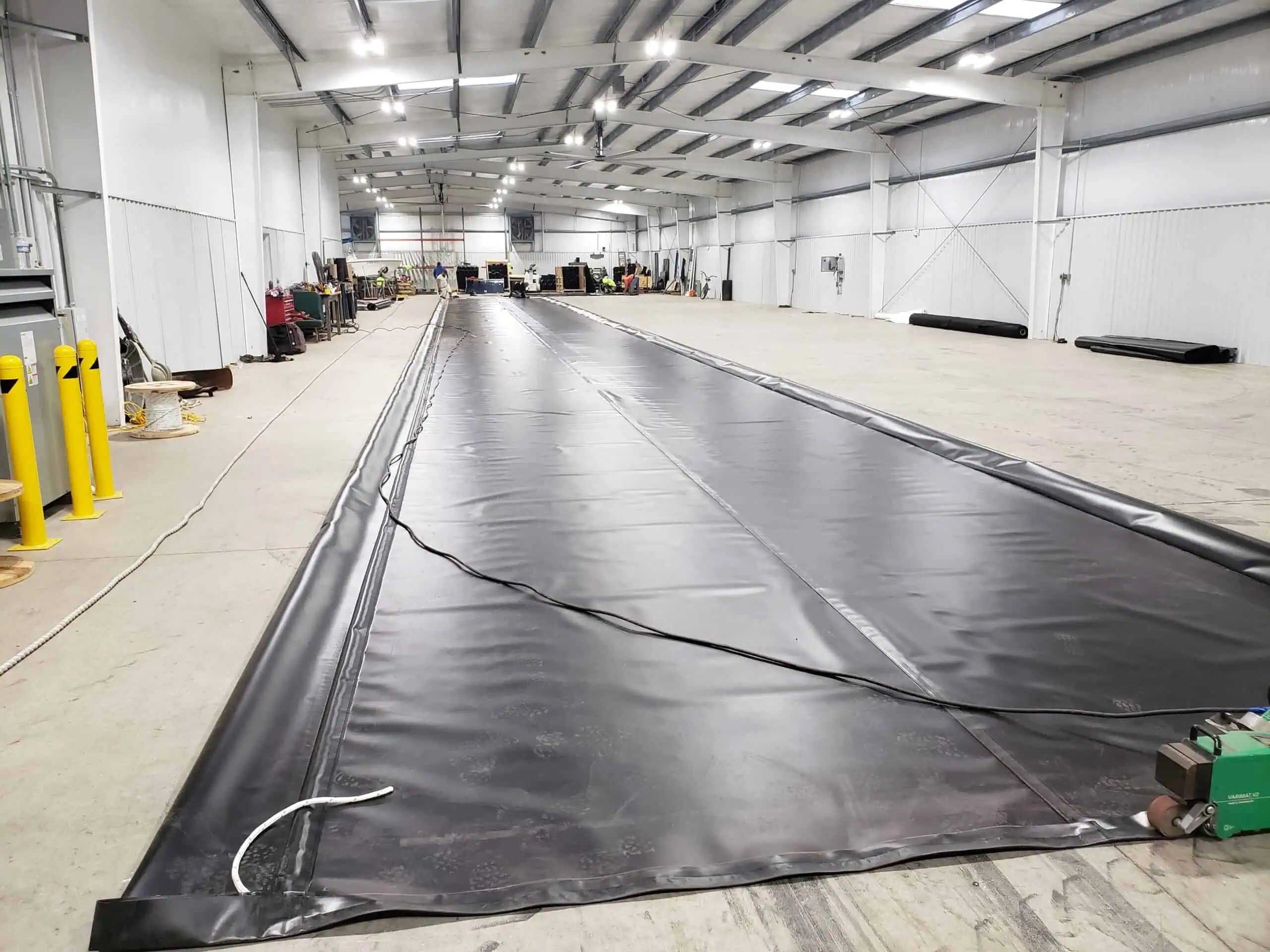
Not all seams are created equal. Factory seams are produced under conditions that are fundamentally more controlled than anything achievable in the field:
| FACTOR | FACTORY vs. FIELD |
| Temperature | Factory: climate-controlled environment. Field: subject to ambient swings, cold mornings, midday heat. |
| Substrate | Factory: flat, stable welding tables. Field: irregular grade, soft subgrade, slopes. |
| Equipment | Factory: stationary, regularly calibrated machines. Field: portable units subject to transport wear. |
| Operator focus | Factory: dedicated welders in a low-distraction environment. Field: welders managing terrain, weather, and logistics simultaneously. |
| CQA coverage | Factory: 100% of seams tested before panels leave the facility. Field: tested after installation with access constraints. |
| Weather exposure | Factory: none. Field: wind, rain, frost, UV, and humidity all affect weld quality. |
Best Practice: Maximize Panel Sizes
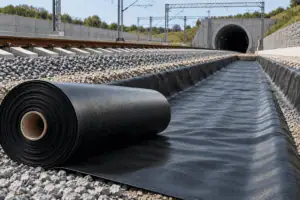
Whenever possible, specify and request the largest prefabricated panels your project can logistically handle. The limiting factors are typically transport (road width, permit loads, equipment access to the site) and the site’s topography — but within those constraints, bigger panels are almost always better.
Maximizing panel size delivers compounding benefits:
- Fewer field seams means less exposure to field welding risk, less CQA effort on-site, and a simpler final documentation package.
- Faster installation — large panels unfold quickly, and a crew can cover significant area with minimal seaming.
- Reduced labor costs on-site, where crews are more expensive and less productive than factory workers.
- Improved safety — less time spent by workers on slopes, in confined areas, or operating welding equipment in adverse conditions.
- Cleaner CQA records — factory seam documentation is typically more complete and easier to audit than field records.
E Squared Insight: Logistics Planning Pays Off
|
Checklist for Engineers & Owners
During Design & Specification
- Specify factory fabrication explicitly in bid and design documents — do not leave it to contractor discretion.
- Coordinate with your fabricator early to understand maximum panel dimensions for your site access constraints.
- Confirm maximum panel widths and lengths that can be transported to your site given road, bridge, and permit restrictions.
- Review site topography to identify areas where large panels can be deployed vs. areas requiring more field seaming.
- Request that the fabricator submit panel layout drawings for review before production begins.
During Procurement & Fabrication
- Require suppliers to provide prefabrication data sheets documenting seam locations, welding parameters, and equipment calibration records.
- Confirm that factory CQA documentation — seam maps, test logs, and destructive test results — will be included in project submittals.
- Verify that all factory seams are tested non-destructively (spark or air pressure) before panels are shipped.
- Request representative destructive test coupons from factory seam production for independent verification.
During Installation
- Inspect panels on delivery for transport damage before unrolling — document any issues immediately.
- Maintain a panel deployment log that cross-references factory seam locations with as-installed positions.
- Treat all field connection seams between prefabricated panels with the same rigor as any other field seam — factory quality is not a substitute for field CQA on connection seams.
Key Takeaway
Every seam you move from the field into the factory increases confidence in your containment system. Prefabrication isn’t just faster — it’s smarter, safer, and more reliable. The upfront coordination required to maximize panel sizes pays back many times over in reduced field labor, fewer non-conformances, and a simpler CQA documentation package at project close-out.